The best WordPress themes for personal finance blogs are blog-first, highly readable, distraction-free, and designed to build trust. They prioritise content structure, clarity, and long-term scalability over visual trends or flashy layouts.
What Is a Personal Finance Blog Theme?
A personal finance blog theme is a WordPress theme designed specifically for educational, long-form content about money — budgeting, saving, investing, careers, and financial well being.
Unlike lifestyle, influencer, or magazine themes, a good finance blog theme focuses on:
- clarity over decoration,
- trust over branding flair,
- content hierarchy over visual complexity.
The design’s main job is to support understanding, not distract from it.
What makes a WordPress theme good for a personal finance blog?
The best personal finance blog themes share a few non-negotiable traits.
- Excellent long-form readability. Finance content is often dense and instructional. A good theme is optimized for reading, by things like clear content hierarchy, good line lengths, legible fonts, and generous spacing.
- Minimal visual noise. Sliders, animations, and decorative elements may look impressive, but they can be distracting and undermine trust in your content.
- Professional, neutral design. Personal finance blog needs to build trust. Overly playful or trend-driven aesthetics can unintentionally reduce perceived authority.
- Easy navigation between related posts. Finance blogs often rely on content depth rather than one-off viral posts. A good theme makes it easy to:
- explore related topics,
- find cornerstone articles,
- move naturally through the site.
Performance and accessibility basics
Fast loading, accessible layouts, and mobile-friendly design aren’t optional — especially for content-heavy blogs. Vast majority of traffic these days is from mobile devices, which requires a fine-tuned and balanced approach in terms of both page loading speed and layout.
A solid first step is to simply visit a theme demo site from a mobile device and pay attention to how fast it loads and how easy it is to access the content (can’t be pushed down too far down the page), and what is it like to read an article (are the fonts large enough for comfortable reading, is all the space utilized well, etc.).
Why design matters more for finance blogs than most niches
Readers come to finance blogs to make real decisions — about money, work, and long-term plans.
If a site feels cluttered, confusing, or amateurish, readers will pick up on those cues and may question the reliability of the information itself, even if the content is excellent.
In this niche, clarity and trust are part of the product.
Common mistakes when choosing a personal finance blog theme
Many bloggers struggle not because their content is weak, but because their theme works against them.
Common issues include:
- choosing a magazine or lifestyle theme not built for education,
- prioritising visuals (large sliders, animations, or themes that heavily rely on imagery) over readability,
- starting with ecommerce-first layouts before they’re needed,
- using themes designed for influencers rather than educators.
A theme that looks “cool” isn’t always a theme that works well for finance content.
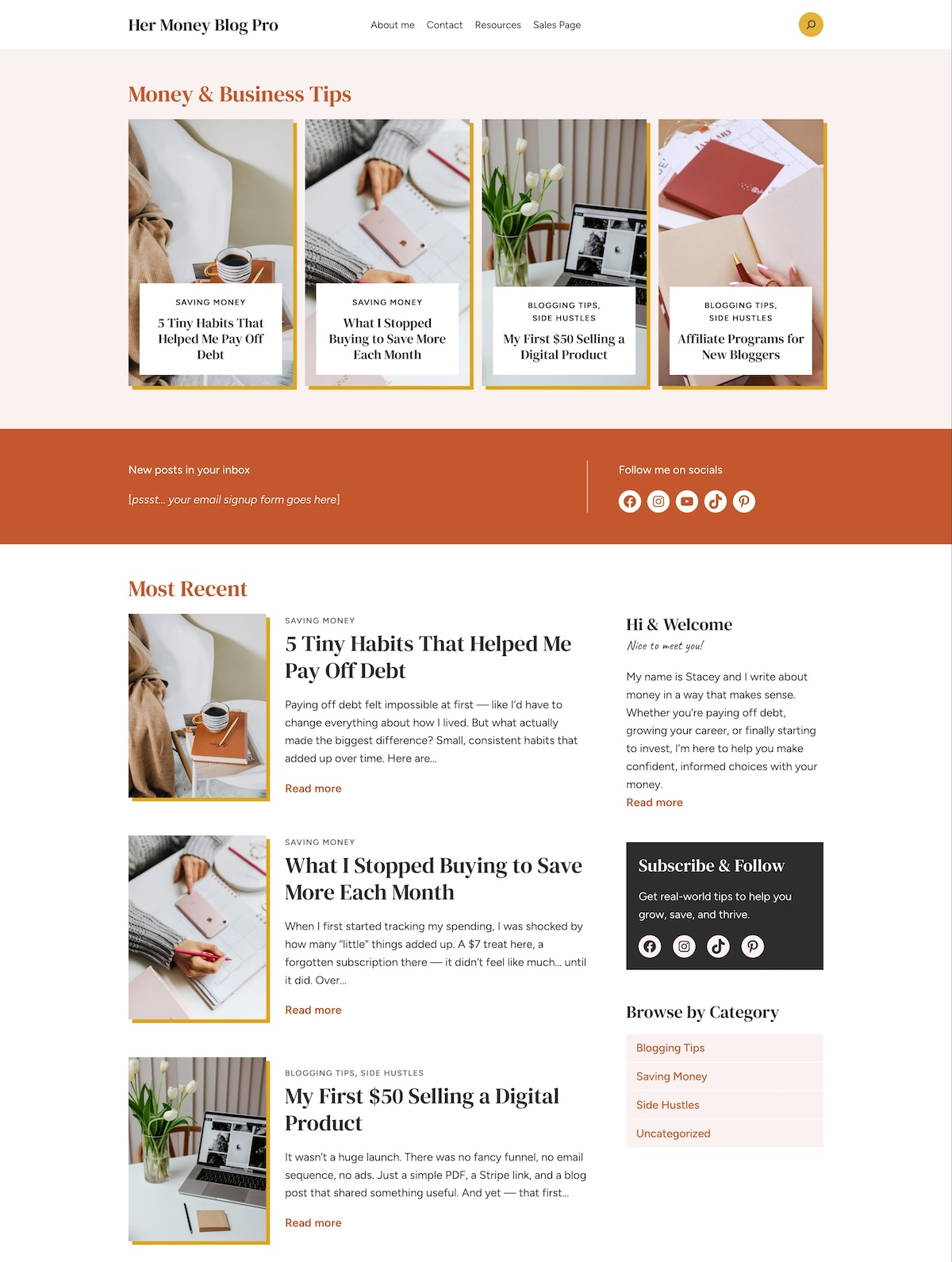
Her Money Blog: a theme built specifically for personal finance blogging
This is why I created Her Money Blog – a WordPress theme designed specifically for personal finance blogs and educational money content.
I spent a lot of time in research mode, looking at the existing themes, and reading customer reviews to make sure I’m addressing all the needs of a finance blogger, while still keeping visual side professional and high-quality.
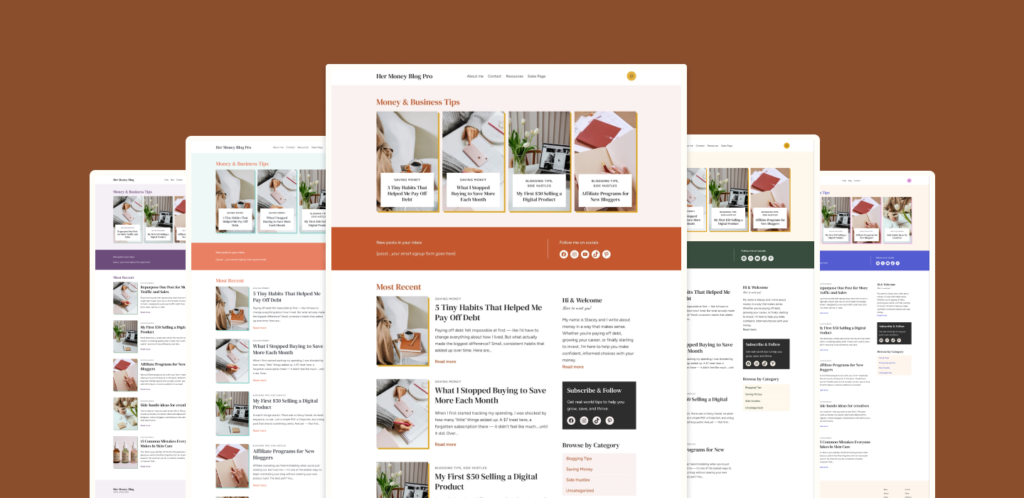
Her Money Blog offers:
- blog-first layouts optimised for long-form posts,
- clean, readable typography,
- clear content hierarchy for educational articles,
- minimal distractions that support trust and focus,
- professional design that leans feminine, but is fully customizable to match any brand.
The structure is intentionally simple, making it easier for readers to follow complex topics like budgeting, saving, investing, and career decisions.
Because it’s designed around finance content from the start, it works well for blogs that plan to grow over time through ads, affiliate links, or resource-based monetisation — without needing heavy customisation.
Frequently asked questions
Do I need a premium WordPress theme for a personal finance blog?
No, but a premium theme can save time and provide better structure, especially if you publish long-form educational content regularly. My premium themes also come with premium support which can be a huge time save if you run into any issues.
Can I start a finance blog with a free theme?
Yes. Many bloggers start with free themes and upgrade later once they understand their needs and audience. Just follow the guidelines in this article while picking a theme.
What’s the biggest mistake people make when choosing a finance blog theme?
Choosing a theme based on how it looks in a demo or a screenshot, rather than how it supports reading, trust, and content structure. Personally I would also avoid anything overloaded with animations or large sliders – these tend to slow down the site and distract from the content.
Is WordPress a good platform for personal finance blogging?
Yes! WordPress is flexible, scalable, and well-suited to long-term content-driven sites, which makes it a strong choice for finance blogs.
Final thoughts
The best WordPress theme for a personal finance blog isn’t the most popular or visually impressive one. It’s the theme that supports clarity, trust, and long-term content growth — and quietly stays out of the way while your content does the work.
You might be interested in…
- What to look for in a WordPress theme – a more general post with tips on how to pick a WordPress theme that matches your website goals.
Happy creating!