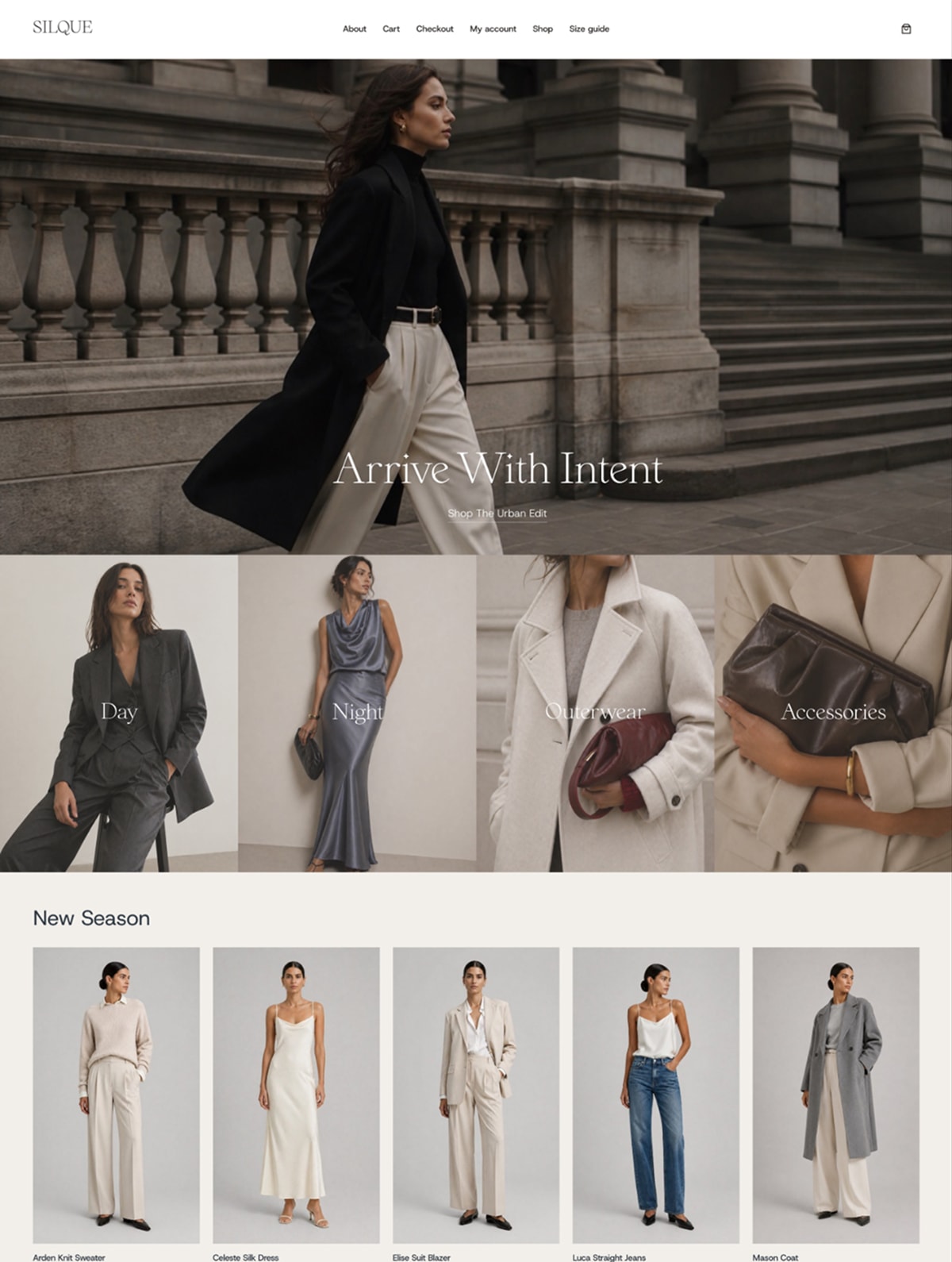
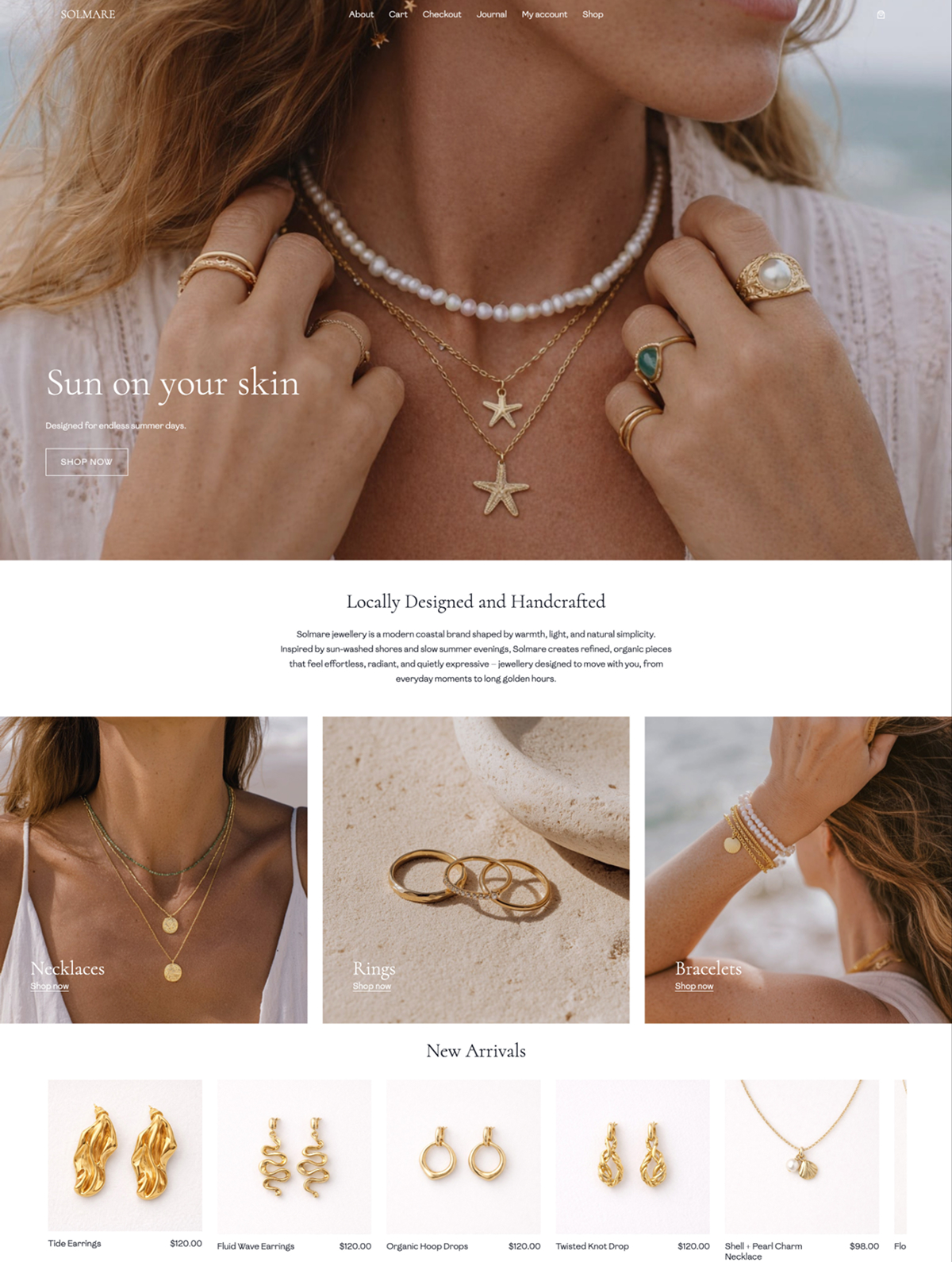
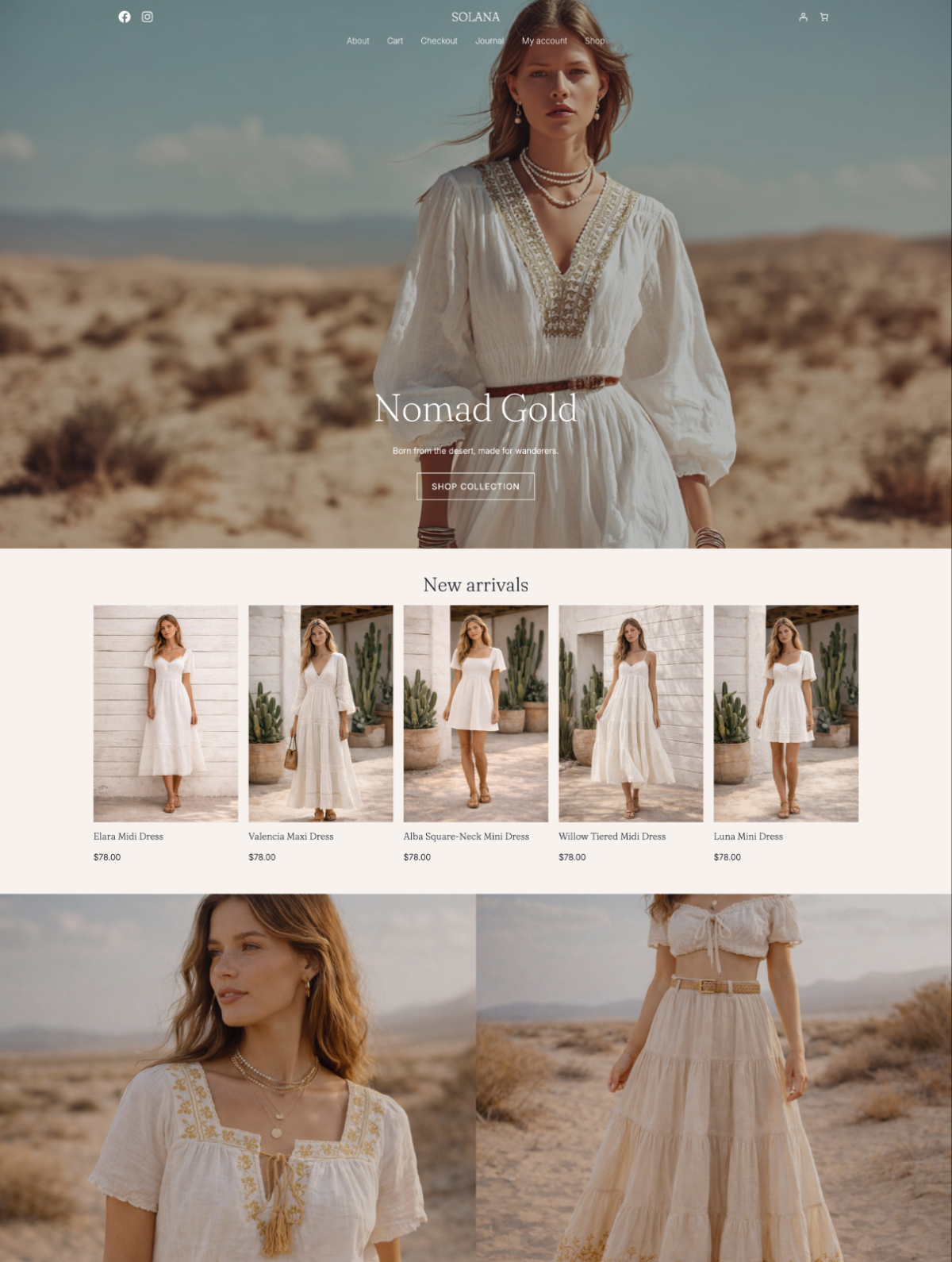
Starting an online clothing boutique isn’t just about listing products — it’s about presentation.
Fashion is visual. The way your products are spaced, photographed, and framed affects how customers perceive your brand. A cluttered layout can make even beautiful pieces feel ordinary. A clean, intentional theme can elevate your entire store.
If you’re building your boutique with WordPress and WooCommerce, choosing the right theme is one of the most important decisions you’ll make early on. Some themes give you total flexibility. Others focus on e-commerce features. And some are designed specifically to create a cohesive, boutique-style aesthetic out of the box.
In this guide, we’ll look at the main types of WordPress themes online clothing boutiques typically use, and how to decide which approach fits your brand.
And if you’re wondering how to start and online clothing store, check out this step-by-step guide that walks you through the whole process.
What an online clothing store theme really needs
Think about the online stores you keep going back to, the ones that feel aspirational and genuinely put together. If you look closely at what makes them work, there’s usually a pattern.
The color palette supports the photography instead of fighting it. The typography reinforces the brand’s tone, whether that’s soft and minimal, bold and editorial, or somewhere loosely bohemian. The product grid spacing feels like someone made a decision about it. Nothing looks like it landed there by accident.
That kind of coherence doesn’t just happen. It gets built into the structure of the site from the beginning, and structure starts with the theme you choose.
A clothing boutique isn’t a general online store, and the theme probably shouldn’t be either. You need WooCommerce compatibility, obviously, but beyond that you’re really looking for clean, image-forward product grids, typography that creates some kind of hierarchy, a mobile experience that doesn’t feel like an afterthought, load times that don’t make people leave, and a visual mood that actually holds together across the whole site.
When those things are working in the same direction, your store starts to feel curated. When they’re not, it just feels like a collection of stuff on a page. I’m sure you’ve seen online stores like that, and they don’t exactly spark confidence, right?
With that in mind, let’s look at the main types of WordPress themes for online stores, and the trade-offs of each.
The 3 Types of WordPress Themes
When choosing a theme for an online clothing boutique, most store owners end up in one of three categories (often without realizing it).
Framework Themes
Astra, Kadence, Divi – you probably see these recommended over and over again. This is because they’re flexible, technically solid, and widely supported. They come with large libraries of starter templates that you can import with one click. On paper, that sounds ideal. In practice though, browsing through tens or hundreds of designs doesn’t make things easy, only more time consuming.
Because here’s what happens. You install the base theme, then you’re guided to start browsing starter sites. Then you browse, and browse some more. Then you start comparing which demo feels “closest” to what you want. You import one. It looks decent, but not quite right. You start tweaking it, but somehow your site still doesn’t look right, and you’re not sure why. You’re back to browsing 😓 ♾️
It’s a bit like standing in front of a wall of 60 “white” paint samples. Technically, you have more control. In practice, you just have more ways to second-guess yourself, and making a decision you”ll be happy with feels impossible. Too much choice = too much noise.
Framework themes are built to accommodate almost any industry. This is why web agencies and freelance web designers like them – these themes give professionals a solid blank canvas to build on, which is perfect for a skilled professional with a clear vision. But if this isn’t you, more flexibility just means more opportunities to make the wrong choice and dilute the look you were trying to create.
E-commerce Framework Themes
Flatsome, Botiga, and similar themes are also hard to miss. They are similar to framework themes discussed above, but built specifically for online stores. They come with everything you could possibly need: product quick views, built-in filters, sale badges, sliders, countdowns, multiple shop layouts.
Which again sounds great in theory, and in many ways it genuinely is a better fit than a generic multipurpose theme. The starter designs actually look like real stores, the product pages are styled properly, and the cart feels finished. You’re starting from something that already resembles a functioning online store, rather than a blank canvas.
But soon you start running into the same issues as before. You import a demo, it looks good, you start swapping in your images and copy, and then you notice the sale badge is a little loud for what you’re going for. The grid spacing feels slightly off. The hover effects are doing too much. The homepage banner that looked strong in the preview starts to feel disconnected once your own photography is in place.
At that point you move into the settings, where there are variations for almost everything: different product card layouts, badge styles, quick view toggles, sticky buttons, filter positions, animation controls, and combinations of all of the above. None of these options are problematic on their own, and in many cases they’re genuinely useful. The issue is that they introduce a steady stream of small visual decisions, each of which subtly shifts the overall feel of the store. At this point you’ve likely invested at least a couple of hours into this thing, you have decision burnout, and the shop is still not finished.
Let me be clear – for a bigger, feature-heavy shop the flexibility of the framework is the point. For a smaller clothing boutique where the mood and the cohesion are the product, it can pretty easily become more noise than help.
Design-Led Boutique Themes
There’s a third approach, and it starts from a completely different place.
Instead of leading with flexibility or a long feature list, design-led boutique themes lead with a point of view. They’re typically built around a specific aesthetic direction rather than trying to serve every possible use case, which means fewer demos, fewer layout variations, fewer global toggles to work through. But it also means fewer decisions to second-guess at two in the morning.
The typography pairing is already intentional. The spacing feels consistent from page to page. The product grid isn’t trying to do three different things depending on which toggle you switched. The color palette feels considered rather than just configurable. You’re not importing a starting point and then gradually reshaping it into something that fits. You’re working within a design system that has already made certain choices, and your job is to work with those choices rather than around them.
It’s a bit like walking into an IKEA showroom, seeing a fully styled room, and falling in love with it. You want the whole thing, not because every individual piece is remarkable, but because someone already made all the decisions, and figured out how it all goes together. The result feels complete in a way that a cart full of individual items rarely does.
I know that can feel restrictive (at first), especially if you’re used to having a setting for everything. But for a lot of boutique owners it ends up being a relief, because when the structure already supports the mood you’re trying to create, you stop spending time correcting small visual inconsistencies and start actually building the store.
This kind of theme isn’t going to offer 200 starter sites or endless layout combinations. What it offers instead is clarity, and for brands where the overall feeling of the store is a core part of the experience, that’s usually the more useful thing to have.
How These Theme Types Compare for Clothing Boutiques
I just hit you with a wall of text, so thank you if you made it here 🙂 It’s a lot to take in, so here’s a handy little table that boils it down:
| Theme Type | What You Get | Trade-Off | Best For |
|---|---|---|---|
| Framework Themes | Maximum flexibility | Requires design refinement | Designers or agencies |
| E-commerce Framework Themes | Built-in shop features | Visual density + many settings | Large or feature-driven stores |
| Design-Led Boutique Themes | Cohesive aesthetic | Fewer layout variations and options | Mood-driven boutique brands |
I hope this gives you some clarity. But just in case, read on to find out how I would approach this choice, based on the brand.
How to Choose a Store Theme Based on Your Brand
I hope by this point in the article, you probably already know which direction makes sense for you (also, many thinks for sticking till the end!).
Framework themes and feature-heavy WooCommerce themes have their place. But they’re largely built for people who either have the technical chops to use all that flexibility, or the catalogue size to justify all those features. A small clothing boutique built around a specific mood usually doesn’t need either of those things. It needs a solid design-led foundation that feels right out of the box.
If you already know your brand leans minimalist, bohemian, or resort-inspired, starting with a theme that was built around that aesthetic saves you from having to tinker with it for hours. And it just so happens I made a few of those, if you want to take a look 🙂
WordPress Themes for Online Clothing Store: My Picks
Most “best themes” roundups in this space are heavily influenced by affiliate programs rather than genuine curation. The same names appear everywhere for that reason… and you won’t find them on this list. Not because they’re bad (they’re actually solid themes), but because there’s a whole range of more interesting options that rarely get coverage simply because they don’t pay a commission.
So here’s the list I’d actually give a friend opening a clothing boutique.
Atelier (best for clean, editorial fashion brands)
Atelier is the most genuinely design-led option on the official WooCommerce marketplace, and it earns that description. Built entirely on the WordPress Site Editor with no page builder dependency, it’s one of the few themes in this space that feels like it was designed by someone who actually cared about how fashion stores look and feel. Layouts are restrained, spacing is generous, and the overall aesthetic is calm and editorial without being cold. The product grids let photography do the work rather than competing with it, and because it uses native WordPress blocks throughout, you’re not locked into any third-party ecosystem. If you want something that feels current, maintainable, and genuinely boutique without a lot of setup friction, Atelier is worth serious consideration.
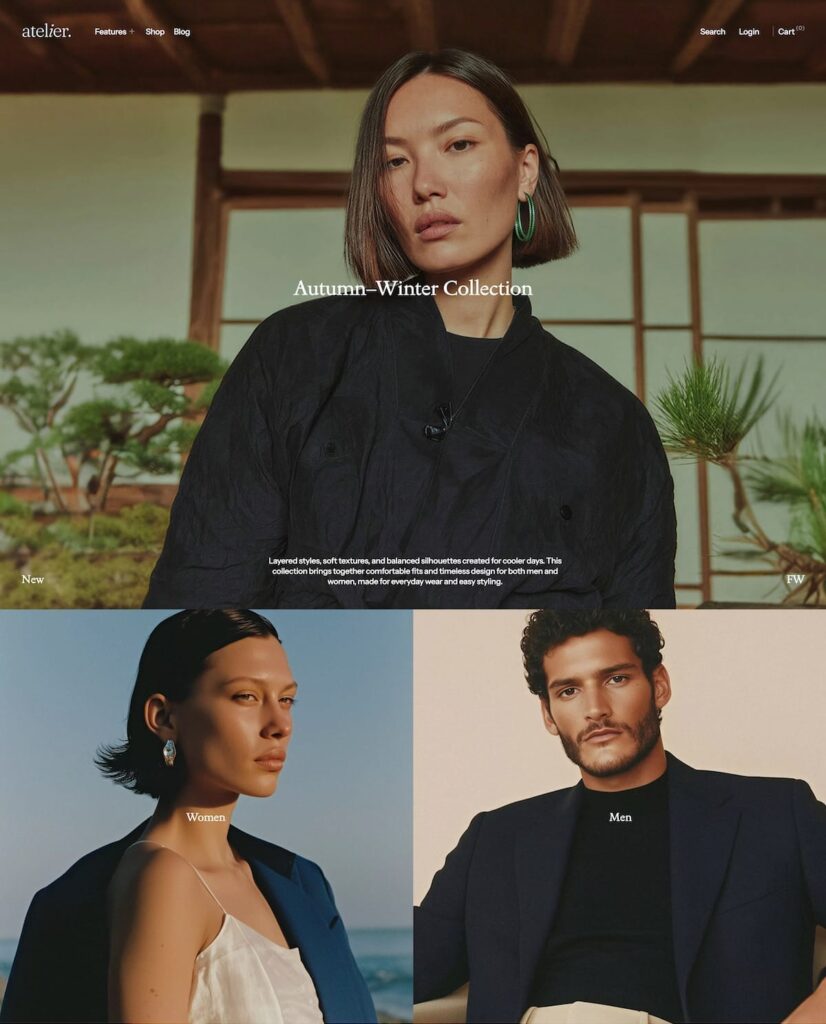
Atelier WordPress theme on the WooCommerce marketplace.
Soza (best for swimwear, lingerie, and resort boutiques)
Most ThemeForest themes come with the usual disclaimer about feature overload, and Soza is no exception: 8 homepage layouts, 21 shop styles, the works. But the reason it made this list is that the aesthetic sensibility running through the demos is noticeably stronger than most of what’s on Envato. The layouts are image-forward in a way that suits the swimwear and lingerie niche specifically, with clean, slightly sensual, generous with white space. If your boutique sells resort wear, swimwear, or intimate apparel and you want a starting point that already understands the mood, Soza gives you a more considered foundation than a generic fashion theme would. Just go in knowing which demo you’re working from and resist the temptation to explore all 21 shop layouts.
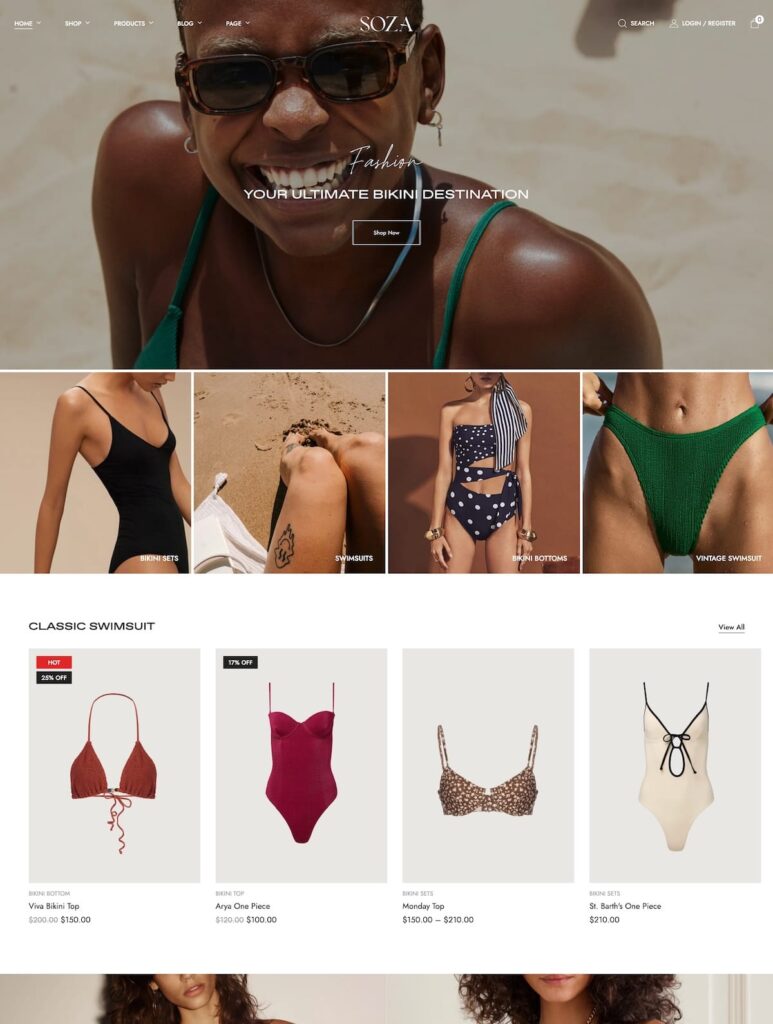
Soza WordPress theme on ThemeForest.
Dianne (best for jewellery, accessories, and luxury boutiques)
Dianne is a newer ThemeForest entry with relatively few sales so far, which in this case works in your favour as it means it hasn’t been diluted across thousands of stores yet. The design is clean and minimal in the way that jewellery stores need to be, with layouts that give products room to breathe and a typography approach that feels considered rather than default. It works well for accessories, watches, and handcrafted pieces alongside jewellery. It’s Elementor-based, so there’s a learning curve if you’re not familiar with the builder, but the default demo is close enough to a finished result that you won’t need to stray too far from it.
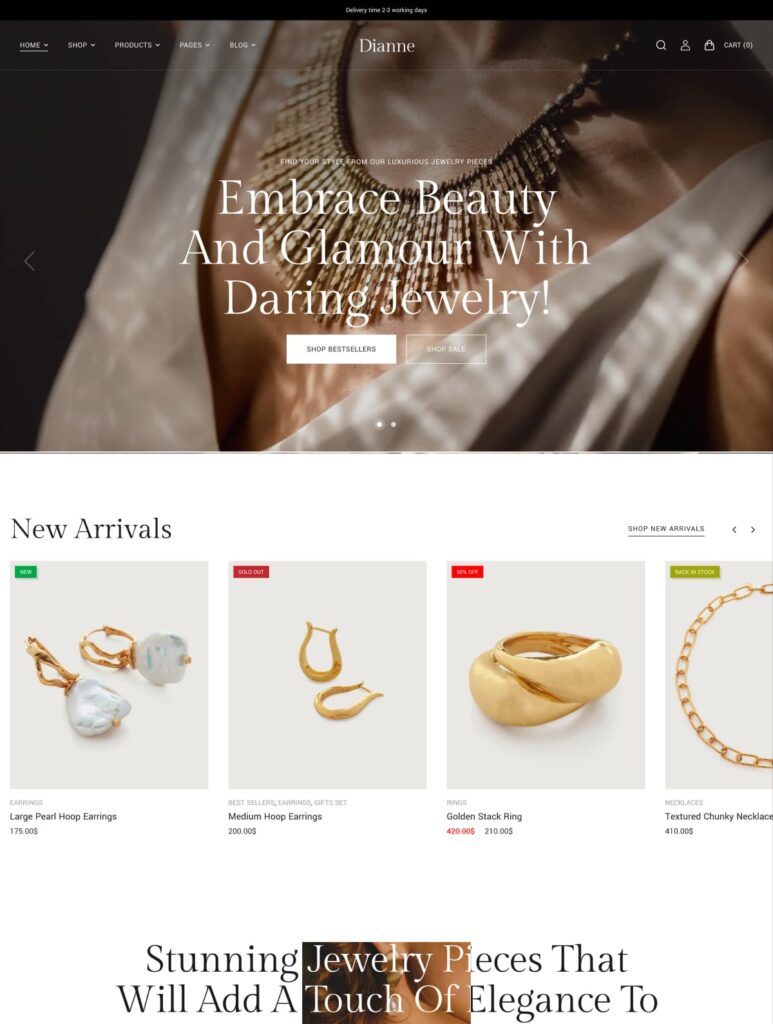
Dianne WordPress theme on ThemeForest.
⭐ Solana (best for bohemian and earthy clothing boutiques)
Full disclosure: this is my baby 🙂
Solana starts from a very specific mood rather than a blank canvas. The typography, spacing, and colour approach are all built around warm, earthy, relaxed brands, which means less time correcting small visual inconsistencies and more time actually building your store. The demo gives you a genuine sense of what your store could look like with your own photography dropped in, rather than a placeholder that looks nothing like the finished product.

Solana WordPress theme on The Theme Nook
⭐ Solmare (best for coastal, resort, and accessories boutiques)
Also mine, and let me be upfront, it leans more toward jewellery and accessories than pure clothing, BUT if your boutique sells both, or is centred around a coastal lifestyle brand that includes accessories, it’s a strong fit. The aesthetic is cleaner and more refined than Solana, with a coastal, sun-warmed sensibility that works well for resort wear, beach jewellery, and the kind of small-batch accessories brands that live on Instagram. The product grid is minimal and image-forward, the overall mood is consistent from homepage to checkout, and like Solana it’s built around a specific feeling rather than maximum number of options.
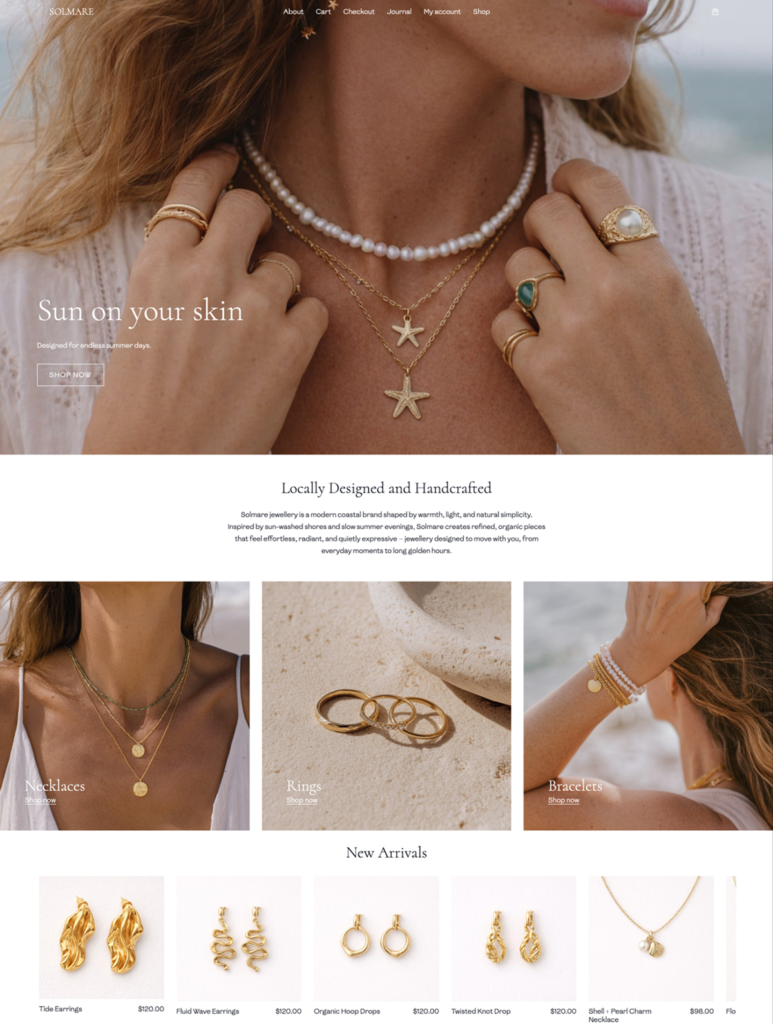
Solamre WordPress theme on The Theme Nook
The market for design-led store WordPress themes is thin. These themes are hard to find, which is part of why most store owners end up settling for a framework theme and spending weeks trying to make it feel right. My hope is that you’ll find something that catches your eye on this list, and brings you closer to opening your shop.
Frequently Asked Questions
What is the best WordPress theme for a small clothing store?
If you’re running a smaller boutique with a curated collection, cohesion matters more than features. A theme with intentional typography, generous spacing, and a clear aesthetic direction will usually produce a more polished result than a highly configurable framework.
Large template libraries can be useful, but they also introduce more design decisions. If you don’t want to spend weeks refining small details, starting with a design-led foundation tends to be simpler.
Do I need a theme built specifically for fashion or will any WooCommerce theme work?
Technically any WooCommerce compatible theme will let you sell clothes online. But there’s a difference between a theme that can display products and a theme that’s built around how clothing actually gets browsed and bought. Fashion shopping is visual and emotional in a way that, say, buying a USB cable isn’t.
A theme designed with that in mind will handle things like image-forward grids, lookbook-style layouts, and typography hierarchy in ways that a general multipurpose theme usually doesn’t prioritize. You can get there with a generic theme, but you’ll be pushing against it the whole way.
Can I start with a free theme for my clothing boutique? Are free themes good enough for fashion stores?
Yes. Free themes can work, especially if they provide a clean structure and strong WooCommerce integration. If money is tight, they’re worth exploring. A solid general free WooCommerce theme would be Storefront. For clothing brands specifically, I created a free theme called Fashion Nook.
The honest answer though is that free themes tend to show their limits quickly once you start trying to create something that feels distinct. The design decisions are usually conservative by necessity, the support is limited, and the updates can be inconsistent. For a store where the visual experience is doing a lot of the selling, a well-chosen premium theme is usually worth the cost. Plus many are a one-time purchase in the $50-$100 range, which is a small investment relative to everything else you’re putting into the store.
Can I change my WordPress theme later without breaking my store?
Yes, but it’s rarely as simple as it sounds. Switching themes will preserve your products and content, but anything tied to your old theme, like custom layouts, specific page builders, design settings won’t carry over. The more you’ve customized, the more you’ll need to rebuild. It’s doable, but it’s work. Which is one more reason to spend time choosing the right theme upfront rather than treating it as something you can easily revisit later.
Final thoughts
The market for design-led store WordPress themes is thin. These themes are hard to find, which is part of why most store owners end up settling for a framework theme and spending weeks trying to make it feel right. My hope is that you’ll find something that catches your eye on this list, and brings you closer to opening your online store.
And if you’re still not sure where to start, the best move is usually to look at a theme’s demo the way you’d look at a finished store, not asking “can I change this?” but “does this already feel like me?” The answer will tell you most of what you need to know.