If you’re selling on Etsy and things are finally starting to click. You’re getting consistent sales, positive reviews, and repeat customers. But you start to wonder:
Should I start my own website instead of Etsy?
It’s one of the most common questions growing boutique and handmade brands ask.
Etsy is an incredible place to validate your product and ideas. It gives you traffic, payment processing, and built-in trust, plus it handles the technology side for you. But at some point, many sellers start to feel a shift.
You’re not just testing products anymore. You’re building a brand.
And that’s when having your own website starts to make sense.
In this article, we’ll look at three clear signs you might be ready to move beyond Etsy — and what that next step could look like.
So… how do I know I’m ready?
Etsy is a great place to validate your ideas, while online store is a tool to scale your business.
There’s a reason why Etsy is so popular – it comes with built-in audience (this is a doozy!), selling tools, stats, and payment handling, among other things. All you have to do is come up with products. It’s the place to be to validate your ideas in low risk environment.
But once you’ve found your rhythm — when you’re getting consistent sales, starting to build a loyal customer base, and maybe even thinking about the “bigger picture” for your business — that’s when a stand-alone website really starts to make sense.
So, if you’re making consistent sales on Etsy, you may find that…
You bump against Etsy’s limits
At first, Etsy feels effortless. You upload your listings, and there’s already traffic flowing through the platform. You don’t have to worry about hosting, checkout systems, or technical setup — you just focus on creating and shipping your products.
But as your business grows, you start to notice the limits.
You’re driving traffic from Instagram or Pinterest — but once customers land on your listing, they’re surrounded by competitors. You can’t control the layout, the typography, or how your collections are presented. You can’t fully shape the customer journey from first impression to checkout.
You’re sending out more orders, but your profit margins aren’t growing the way you’d hoped.
And when Etsy changes its algorithm, fees, or policies, your business shifts with it, and there’s not much you can do about it.
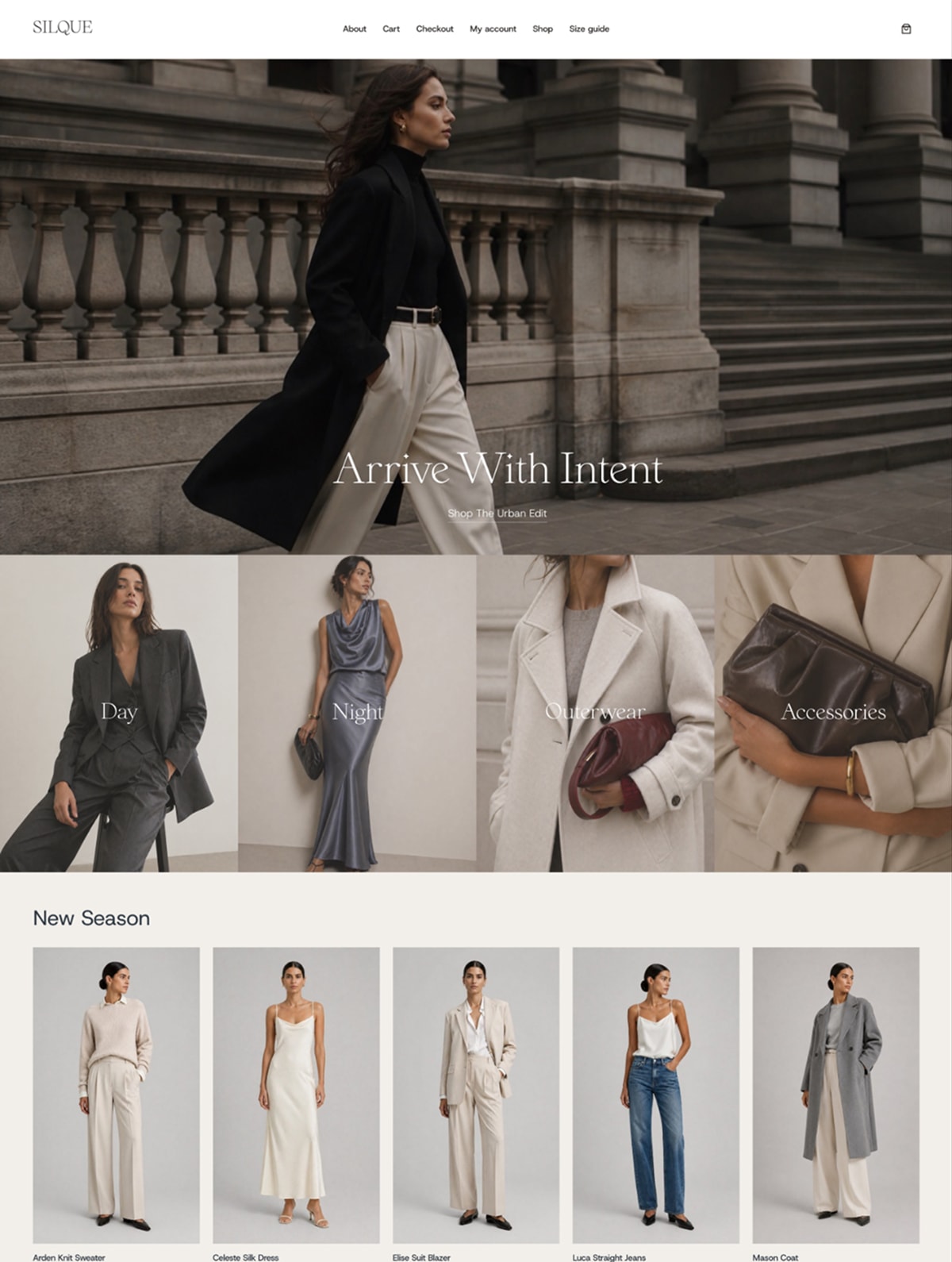
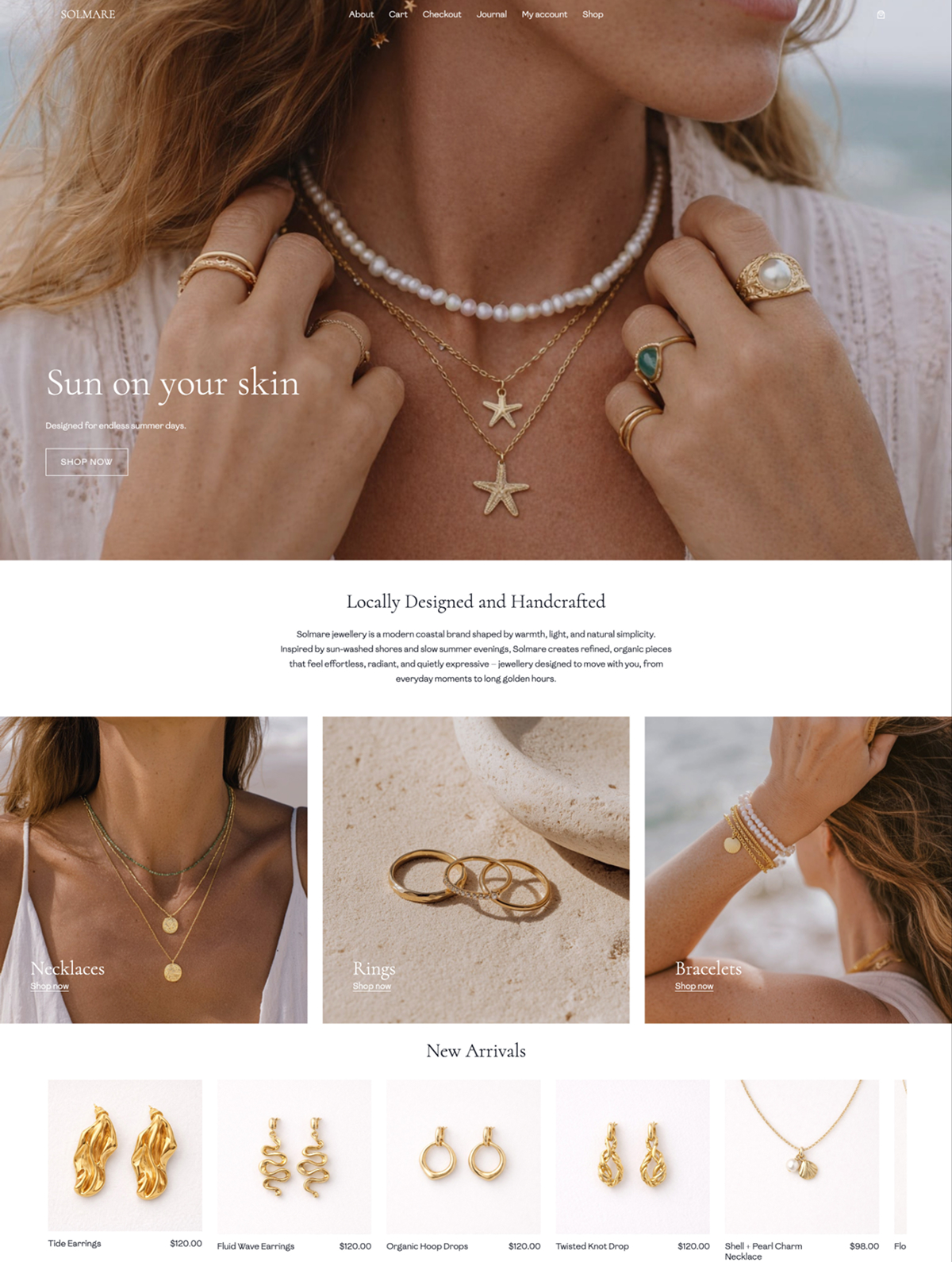
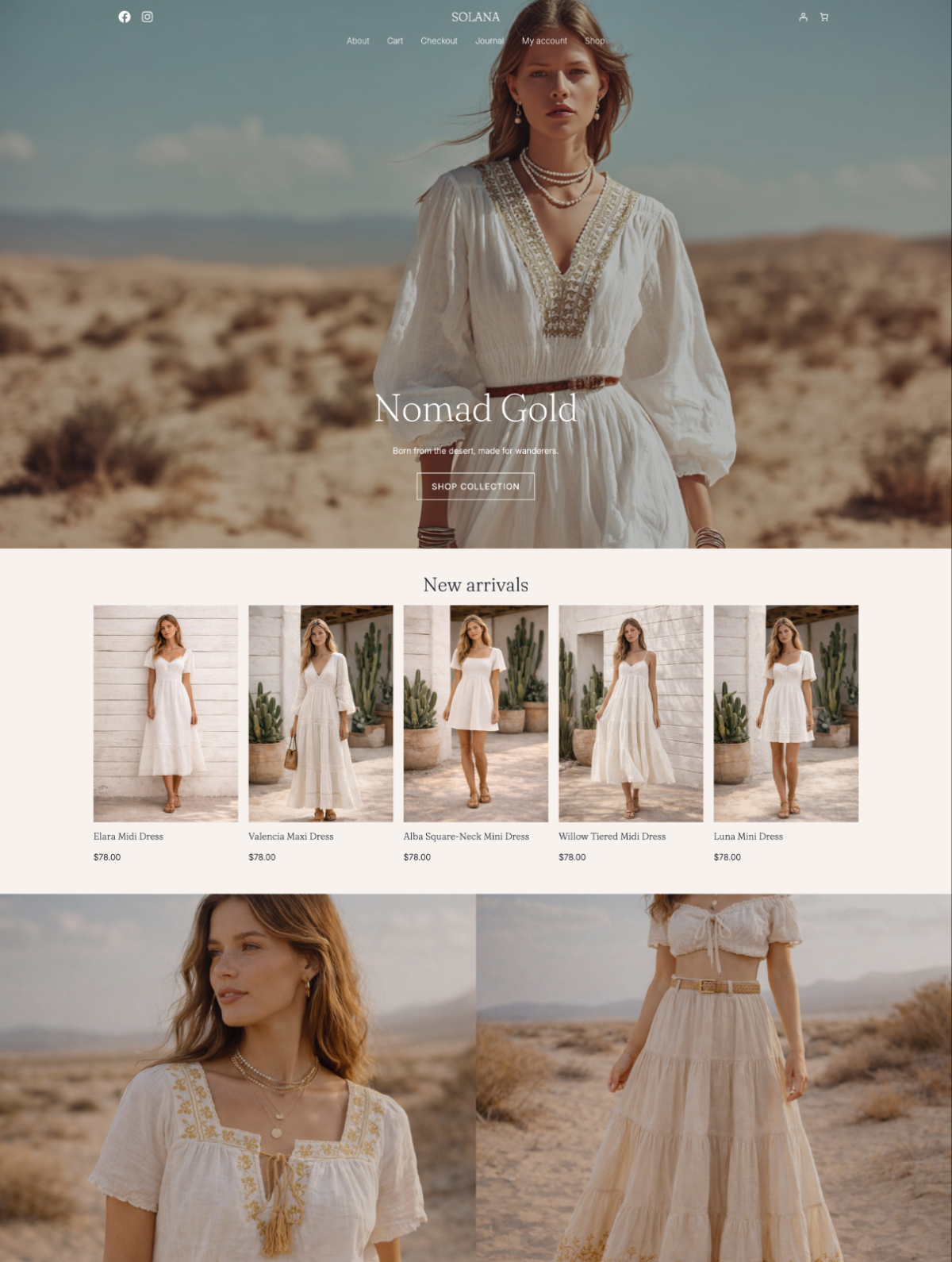
For boutique and fashion brands especially, this lack of control can start to feel restrictive. When your products rely on mood, styling, and visual identity, the platform’s fixed design begins to work against you instead of for you (psst… check out my style packs to see how the right WordPress theme can set the mood of your online store).
That’s usually the first sign it might be time for something more flexible.
You’re starting to feel the pinch from fees
At first, the fees don’t seem like a big deal, a few percent here, a few cents there. But as your sales grow, you start to really notice how much of your revenue isn’t actually going to you.
There’s the transaction fee, the listing fee (which renews every 4 months), the payment processing fee. And then there’s offsite ads, which you’re automatically enrolled in if you make over $10k/year, and can cost up to 15% per sale.
Individually, they might not sound like a lot. But together? They can eat up 10–20% of your order before you even factor in your product costs, packaging, or time.
And just to be clear — you’ll always have some kind of payment fee no matter where you sell. Stripe, PayPal, your own site — they all take a small cut to process payments. That’s the cost of doing business. But Etsy layers multiple fees on top of that, and you don’t have much control over them (and you can’t shop around for a better deal).
If you’ve ever looked at your monthly revenue and thought, “Wait… I sold that much, but this is what I actually made?”, it might be a sign you’re ready to grow beyond Etsy.
So if you’re feeling the pinch from Etsy’s fees, sit down with a piece of paper (and a coffee!) and do some math.
Look at your current profit margins, and ask:
- What’s your average order value?
- How much are you spending on materials, packaging, and shipping?
- How much are Etsy’s fees cutting into each sale?
- And how many orders are you handling each month?
Now compare that to what it might cost to run your own store:
- Shop platform or hosting (around $5–15/month, although typically paid yearly).
- Domain name.
- Payment processing fees.
- A paid theme and plugins (optional, but often worth it).
- Your time setting things up.
You want to build a real brand, not just a shop
Etsy gives you a storefront, BUT it doesn’t give you a brand experience.
When you’re starting out, that’s fine. You’re validating your ideas and learning what sells. But as your business grows — especially if you’re in fashion, jewellery, beauty, or any visual product category — your presentation starts to matter just as much as the product itself.
On Etsy:
- Your layout is fixed.
- Your typography is fixed.
- Your competitor is one click away.
- Your customer never fully steps into your world.
On your own website:
- You control the mood.
- You choose how collections are presented.
- You guide customers through a curated journey.
- You build recognition that’s independent of a marketplace.
That shift from “selling products” to “building a brand” is often the clearest sign you’re ready for your own site.
Because when customers start recognizing your style, your voice, and your aesthetic, you’re no longer just another shop in a search result. You’re becoming a brand people return to.
You have bigger plans than a single listing page
Once your shop gains momentum, it’s natural to start thinking beyond individual products.
Maybe you want to launch seasonal collections instead of isolated listings.
Maybe you want to create curated bundles.
Maybe you want a homepage that tells your story before someone even sees a product.
Maybe you want to offer exclusive products to loyal customers, and really triple down on building your own email list.
As your business matures, your needs shift from “Where can I list this?” to “How do I present this as a cohesive brand?”
Etsy is built around listings. Your own website is built around experience.
If you’re starting to think in terms of collections, storytelling, and long-term brand recognition — you’re probably ready for a space that gives you more creative control.
Frequently Asked Questions
Is it worth having both Etsy and your own website?
Yes. Many brands use Etsy as one sales channel while building their own website for long-term growth. Your own site gives you full control over branding, customer relationships, and presentation.
⸻
Is it expensive to run your own website?
Not necessarily. Basic hosting, a domain name, and payment processing fees are often comparable to Etsy’s layered fees (especially as your sales grow). The main investment is your time and choosing the right setup.
⸻
What platform should I use instead of Etsy?
There are several options, but WordPress with WooCommerce is popular for sellers who want flexibility and full design control without ongoing marketplace restrictions.
So… what’s next?
If Etsy is working for you, that’s great — no need to fix what ain’t broken. Many successful brands use Etsy as one sales channel, while building their own website alongside it.
But if you’ve hit a point where:
- the fees are eating into your profits.
- the platform is limiting what you can do.
- you’re thinking more about brand than listings
…then building your own website is a natural next step.
For many boutique and fashion brands, WordPress offers a flexible way to create a store that actually reflects your aesthetic, instead of fitting into a marketplace template.
If you’re ready to explore the next steps, check out these articles:
- What to Look for in a WordPress Theme for a Fashion Brand
- Do You Really Need a Premium WordPress Theme?
And if you’re ready to build your own store, here’s a full guide to starting an online clothing boutique with WordPress.
Building your own website doesn’t have to be complicated, and it doesn’t have to happen overnight. But if you’re serious about turning your shop into a long-term, sustainable business — this is the step that makes it real.